
What does the Budget mean for you?
The Chancellor delivered the Autumn Budget on 28 October. We've cut through the detail and picked out the changes we think are most likely to matter to our clients.
Business owners • Landlords • Employers • Individuals
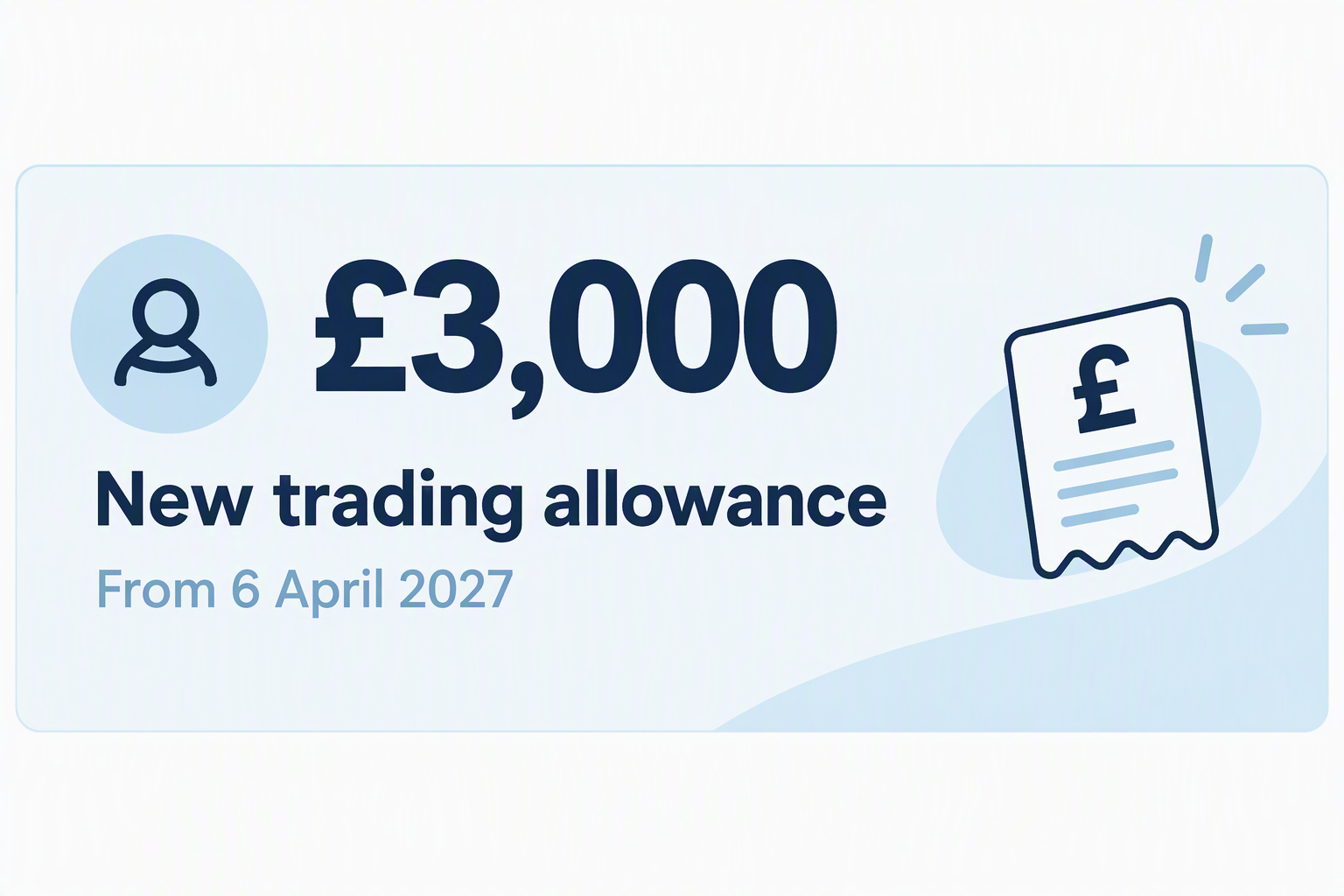
Trading allowance increasing from £1,000 to £3,000
There is some welcome news for individuals with smaller amounts of trading income.
The Income Tax trading allowance will increase from £1,000 to £3,000 from 6 April 2027.
The trading allowance can simplify the tax position for people receiving relatively small amounts of self-employed or other trading income.
It is important to remember that the allowance is generally an alternative to claiming actual allowable expenses, rather than an additional deduction. Where actual business expenses are higher, claiming those expenses may still give the better result.
Business mileage rates increasing
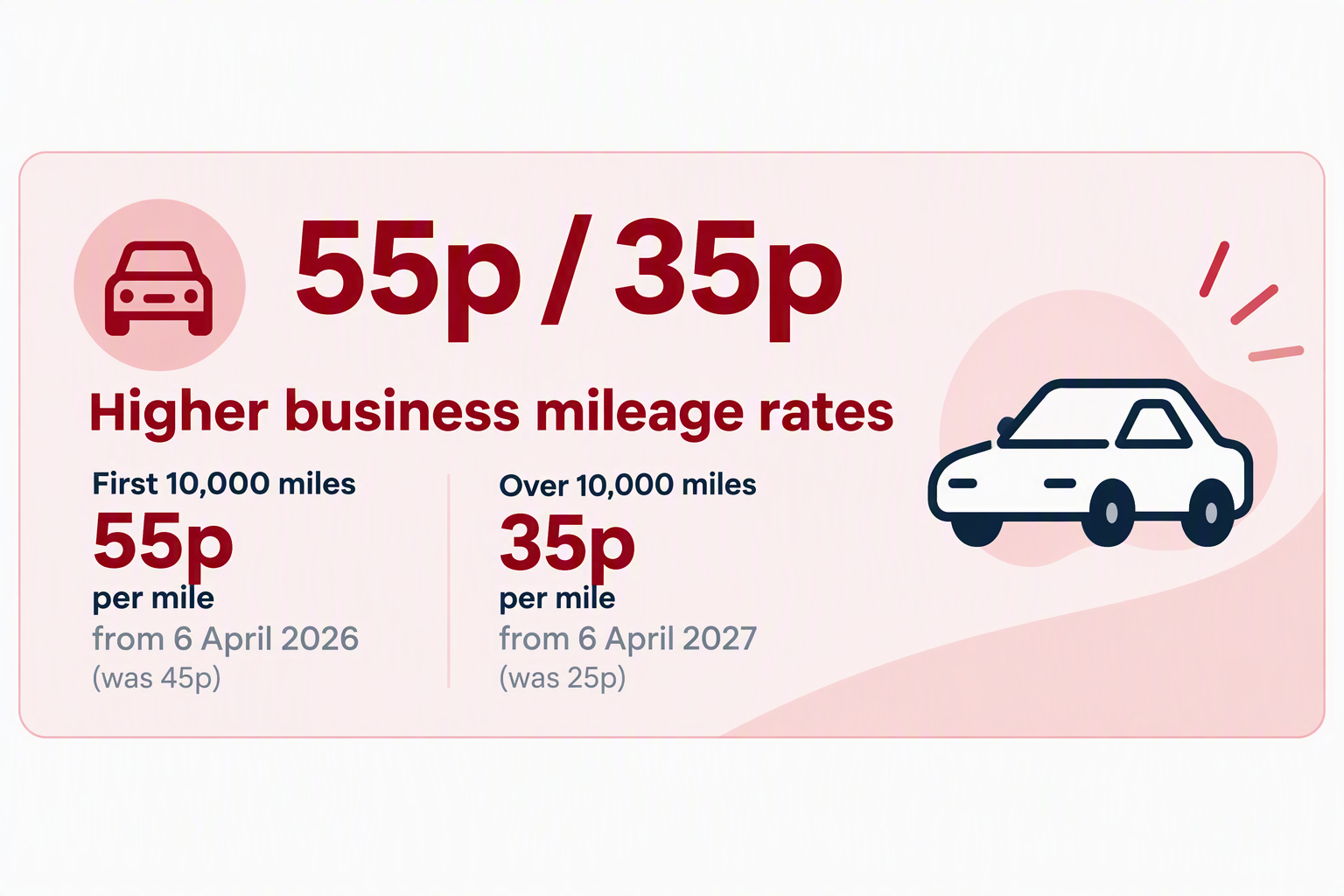
The approved mileage rate for employees using their own cars or vans for qualifying business journeys has increased from 45p to 55p per mile for the first 10,000 business miles, with the change applying from 6 April 2026.
For business mileage above 10,000 miles, the rate remains at 25p per mile for 2026/27, before increasing to 35p per mile from 6 April 2027.
Similar changes are being made to the simplified mileage rates available to eligible self-employed businesses.
This may be particularly relevant to employees using their own vehicles for business journeys and self-employed individuals who use mileage rates when calculating their business expenses.
Landlords and savers: Income Tax rates increasing
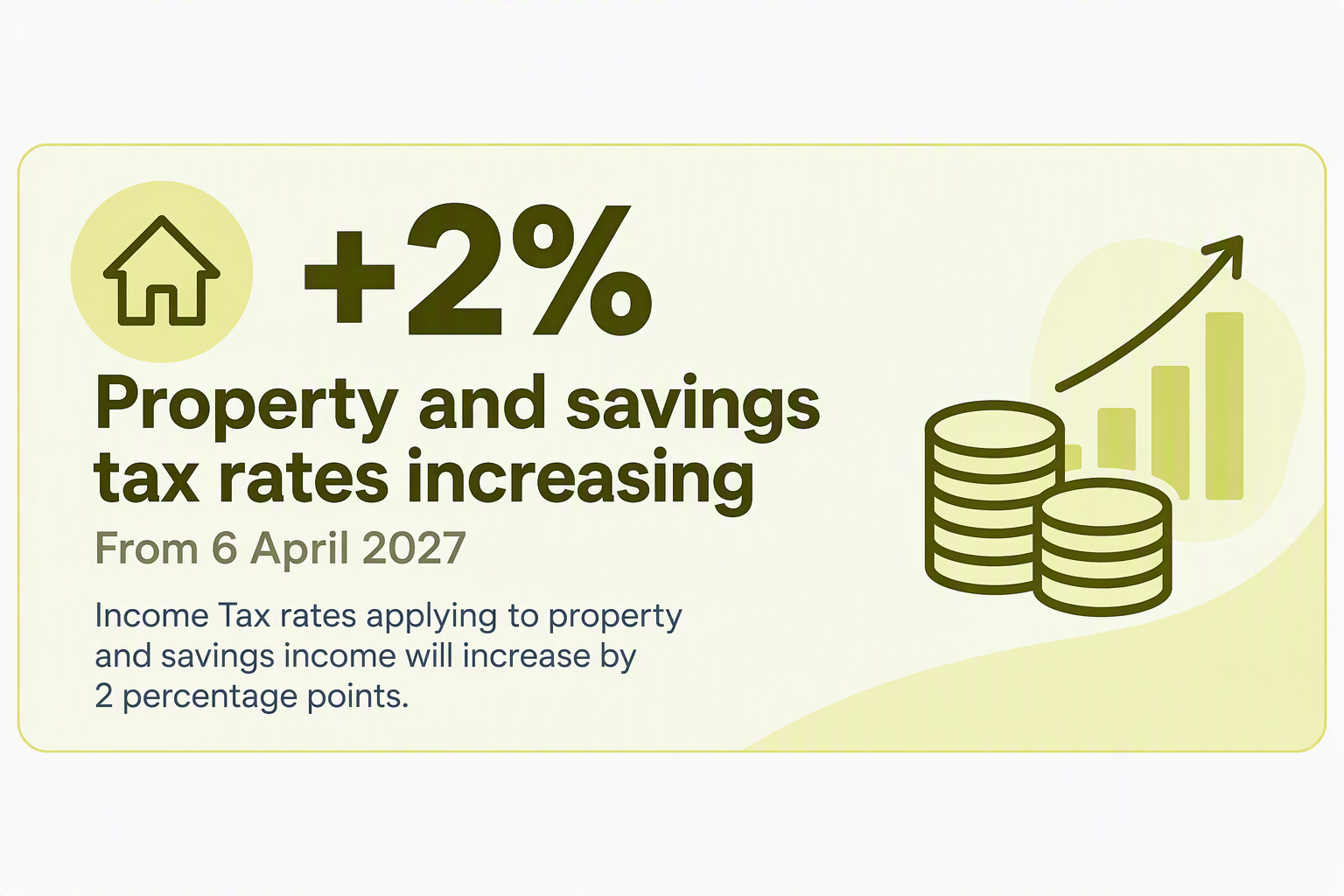
From 6 April 2027, the Income Tax rates applying to property and savings income will increase by 2 percentage points.
This will particularly affect landlords and individuals receiving significant amounts of savings income.
There is no corresponding increase to the tax rates applying to employment or dividend income under this measure.
For landlords, the increase makes it even more important to ensure that all allowable property expenses and available tax reliefs are being considered.
Selling a business? Changes to Business Asset Disposal Relief
The lifetime limit for Business Asset Disposal Relief (BADR) will reduce from £1 million to £500,000 from 6 April 2027.
BADR provides a reduced rate of Capital Gains Tax when qualifying business owners dispose of all or part of their business, including qualifying shares in a personal company.
The reduction in the lifetime limit could therefore be significant for business owners considering a sale in the foreseeable future.
If you are thinking about selling your business or shares, retiring, or making a significant change to the ownership of your business, we recommend speaking to us before taking any action.

National Living Wage and National Minimum Wage
Employers will need to prepare for further increases in the statutory minimum wage rates from April 2027.
The National Living Wage for workers aged 21 and over will increase from £12.71 to £13.21 per hour.
For workers aged 18 to 20, the National Minimum Wage will increase from £10.85 to £11.27 per hour.
Businesses employing staff at or close to the statutory minimum should therefore factor the additional employment costs into their budgets for the coming year.
Business rates: further support for smaller businesses
There was also some welcome news for businesses in the retail, hospitality and leisure sectors.
From 1 April 2027, the rateable value threshold for 100% Small Business Rate Relief for qualifying businesses in these sectors will increase from £12,000 to £18,000.
Tapered relief will extend to businesses with a rateable value of up to £21,000.
This could take more smaller businesses out of business rates altogether or reduce the amount they have to pay.
What happens next?
As is often the case following a Budget, some of the announcements will be followed by further legislation and detailed guidance, and the impact will depend on individual circumstances.
The above is therefore intended as a general overview rather than individual tax advice.
If you would like to discuss how any of these changes may affect you or your business, please get in touch.
